Explore the Classics
Step into the pages of the books that have shaped literature, challenged ideas, and captured the human experience across generations. Here, you’ll find timeless stories, unforgettable authors, thoughtful reviews, reflections, and deeper dives into the works that have earned their place in the literary canon. Some may feel familiar, while others may surprise you—but each offers an opportunity to discover why these books have endured and why they still matter today.

Ancient & Classical Literature
c. 800 BCE - 500 CE
Long before modern novels, bookstores, and literary awards, people were telling stories to make sense of the world around them. Ancient and Classical literature gave us enduring myths, epic journeys, tragic heroes, philosophical questions, and stories that continue to influence writers thousands of years later. From Homer and Sophocles to Plato and Marcus Aurelius, these works explored love, power, war, morality, ambition, justice, loss, and what it means to be human. Their language and worlds may belong to another time, but the questions they ask are remarkably timeless.
Meditations - Marcus Aurelis
Written c. 170-180 CE.
Stoic Philosophy
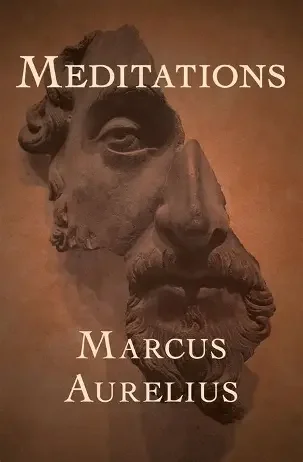
Meditations is not a traditional book in the way we typically think of one. Written by Roman emperor Marcus Aurelius sometime during the second century CE, it is essentially a collection of personal reflections, reminders, and philosophical exercises he wrote for himself. As a follower of Stoicism, Aurelius repeatedly returns to ideas of self-discipline, accepting what we cannot control, treating others with compassion, living according to our values, and remembering that life is temporary.
What makes Meditations remarkable to me is how surprisingly relevant it still feels. Marcus Aurelius lived nearly 2,000 years ago, yet many of the questions he wrestled with are questions we continue to face: How do I respond when life doesn't go as planned? How should I treat people who frustrate me? What is actually within my control? What kind of person do I want to be? His position as emperor makes the reflections even more interesting because immense power and responsibility did not make him immune to frustration, uncertainty, grief, or the challenges of being human.
Why I recommend it. I recommend Meditations because its central message has survived nearly two thousand years for a reason. We cannot control everything that happens to us, but we can work toward controlling how we respond.

Medieval Literature
Medieval literature developed during the centuries between the fall of the Roman Empire and the beginning of the Renaissance. Much of it reflects a world shaped by religion, chivalry, feudal society, war, morality, and oral storytelling traditions. Works range from heroic epics and legends to romances, religious writings, satire, and early storytelling collections. Authors often explored questions of honor, faith, loyalty, love, social class, and human weakness.
The Canterbury Tales by Geoffrey Chaucer
Written c. 1387 - 1400 CE
Medieval Literature / Middle English Literature
c. 500 - 1500 CE
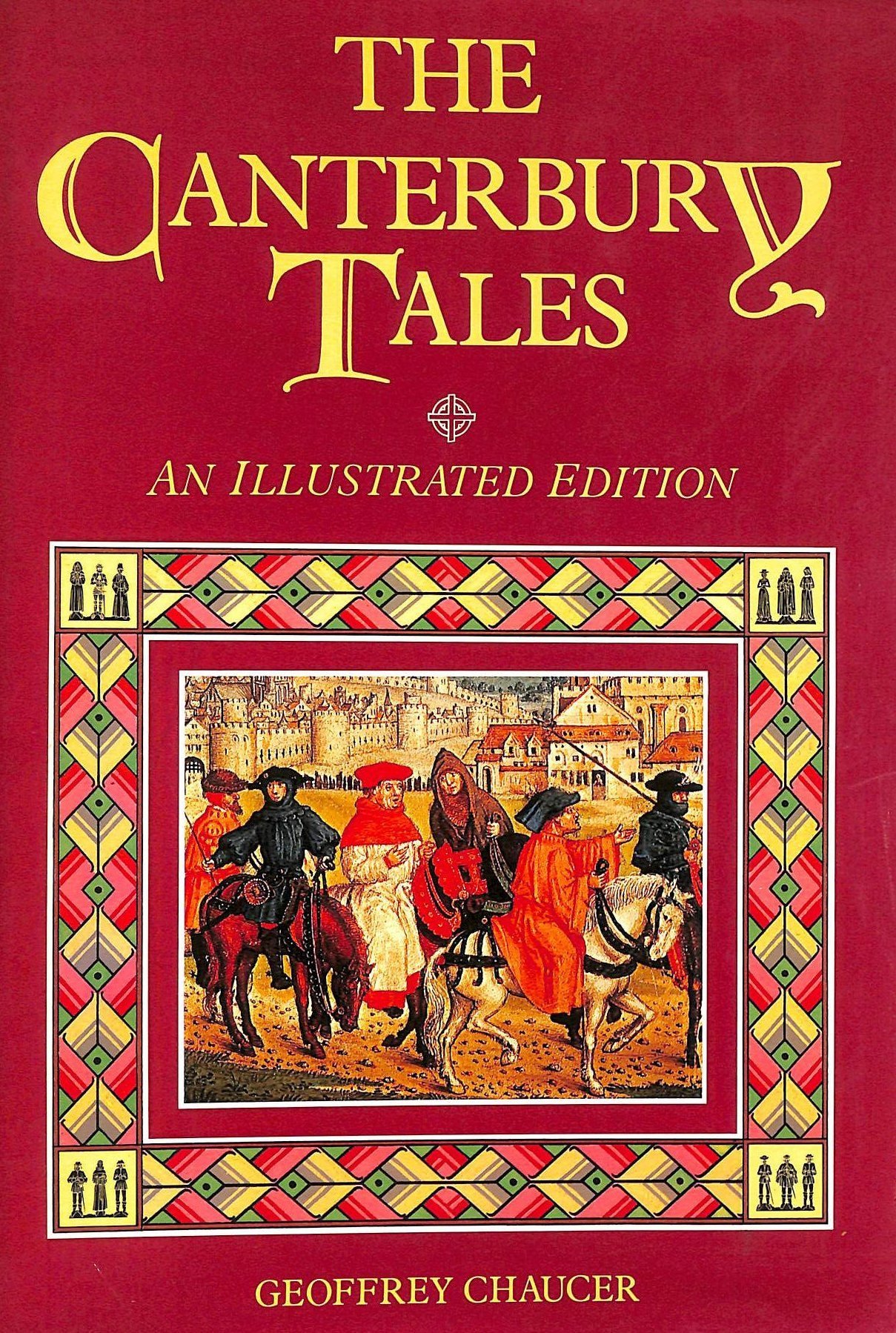
The Canterbury Tales by Geoffrey Chaucer follows a group of pilgrims traveling from London to Canterbury to visit the shrine of Saint Thomas Becket. To entertain one another during their journey, the pilgrims agree to tell stories, creating a collection of tales that range from humorous and bawdy to serious and deeply moral. Each pilgrim brings a distinct personality, background, and perspective, and their stories often reveal as much about the storyteller as they do about the tale itself. Chaucer uses the pilgrims and their stories to explore medieval society, including class, marriage, religion, greed, power, and human nature. Some stories celebrate virtue and compassion, while others expose hypocrisy, corruption, and foolishness. Although the work is rooted in fourteenth-century England, its observations about human behavior remain surprisingly recognizable to modern readers. Together, the tales create a lively and often irreverent portrait of society while establishing The Canterbury Tales as one of the most influential works of English literature.
Why I Recommend It: I recommend The Canterbury Tales because it offers readers a fascinating glimpse into medieval life while exploring human behavior in ways that still feel remarkably familiar today. Chaucer’s collection is funny, provocative, sometimes outrageous, and filled with characters who reveal the complexities of people and society. I especially appreciate how the different pilgrims and their stories provide contrasting perspectives on love, marriage, class, religion, greed, and morality

The Enlightenment & Neoclassical Literary Era
Approximate Period: 1660–1800
The Enlightenment, sometimes called the Age of Reason, was an intellectual and cultural movement that emphasized reason, logic, individual thought, scientific inquiry, and the belief that human beings could improve society through knowledge and education. Writers and thinkers questioned long-standing traditions and authority and encouraged readers to think critically rather than simply accept ideas because they had been handed down. In literature, these ideas often appeared through satire, essays, political writing, philosophical works, and poetry that explored human behavior and society.
At the same time, the Neoclassical literary movement looked back to the literature and artistic principles of ancient Greece and Rome. Neoclassical writers valued order, balance, restraint, reason, clarity, and structure, believing that literature should not only entertain but also instruct and improve its readers. Writers frequently used satire to expose human foolishness and social problems. Together, Enlightenment thinking and Neoclassical literary principles helped create an era in which reason and intellect were celebrated, tradition was questioned, and literature became an important vehicle for examining human nature and society.
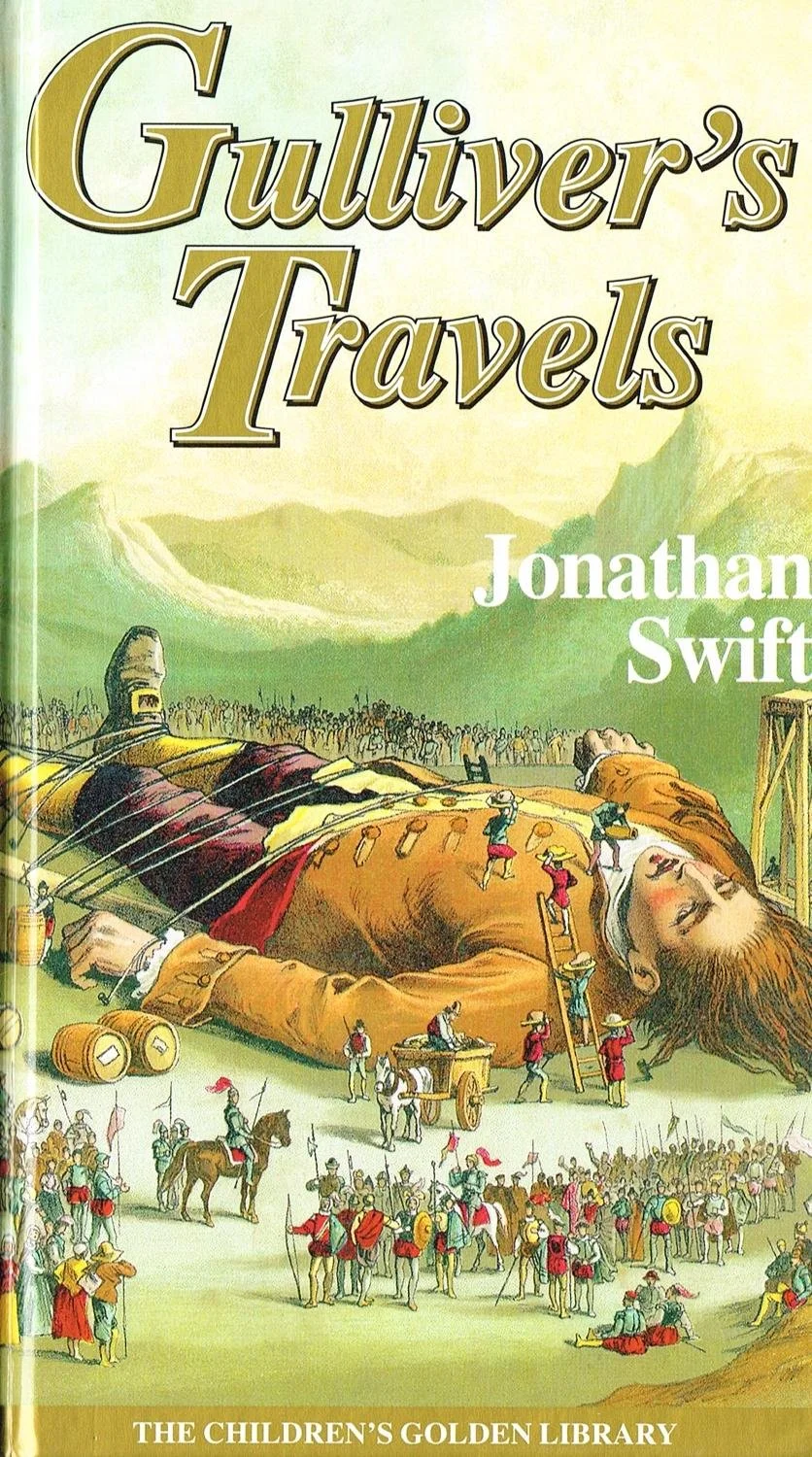
Gulliver's Travels follows Lemuel Gulliver, a ship's surgeon who finds himself traveling to several strange and extraordinary lands. From the tiny people of Lilliput to the enormous inhabitants of Brobdingnag and other unusual societies, each journey exposes Gulliver to a different way of life. Beneath the adventure and fantasy, however, Jonathan Swift uses these imagined worlds to satirize politics, government, science, social class, and human nature. What appears to be a fantastical travel story is ultimately a sharp and often humorous examination of the flaws and contradictions of eighteenth-century society.
Why I Recommend It
I recommend Gulliver's Travels because it is one of those classics that becomes much more interesting when you look beyond the surface of the story. Swift's clever use of satire encourages readers to question society, human behavior, politics, and even our own assumptions about what makes us civilized. I particularly enjoy that the book can be approached on two levels: it can be read as an imaginative adventure, but it can also become a much deeper conversation about human nature and society. It is a wonderful example of how classic literature can entertain us while simultaneously challenging us to think more critically about the world around us.

The Romantic period was a literary and artistic movement that emerged in the late 18th century and flourished through the first half of the 19th century, generally dated around 1780–1850. In Britain, the period is often more specifically associated with the years 1780s–1832, while Romanticism developed somewhat differently across Europe and the United States.
Romantic writers pushed back against the emphasis on reason, order, and restraint associated with the Enlightenment, turning instead toward emotion, imagination, individual experience, nature, and the sublime. Their works often explored the power of the individual, the beauty and mystery of the natural world, social change, freedom, childhood, and the darker sides of human experience.
Some of the most recognizable names associated with British Romanticism include William Wordsworth, Samuel Taylor Coleridge, William Blake, Lord Byron, Percy Bysshe Shelley, and John Keats. The movement also influenced novelists and writers beyond poetry, including Mary Shelley, Jane Austen, and Sir Walter Scott, making Romanticism an especially rich period to explore through both poetry and fiction.
At its heart, Romanticism asked readers to look beyond what can be measured and explained—to consider what can be felt, imagined, remembered, and experienced. That emphasis on emotion, individuality, and the human relationship with the world around us is one reason so many works from this period continue to endure.
Romanticism
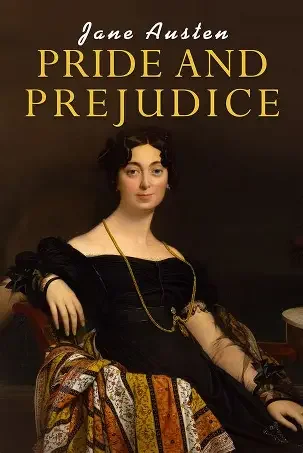
Pride and Prejudice by Jane Austen
Set in Regency-era England, Pride and Prejudice follows Elizabeth Bennet, an intelligent and spirited young woman navigating love, family, and the expectations placed upon women of her time. When the wealthy and charming Mr. Bingley arrives in the neighborhood, Elizabeth's older sister Jane quickly catches his attention, while his proud friend, Mr. Darcy, makes a decidedly less favorable first impression on Elizabeth. As Elizabeth and Darcy continue to encounter one another, their initial dislike slowly gives way to something far more complicated. Along the way, Elizabeth must navigate the schemes of the ridiculous Mr. Collins, the charming but deceptive Mr. Wickham, and the increasingly chaotic behavior of her younger sisters. Austen uses these relationships to explore how quickly we can form opinions about others—and how difficult it can be to admit when those opinions are wrong. Beneath its famous love story, the novel offers a sharp and often hilarious look at class, marriage, money, reputation, and the limited choices available to women. Ultimately, Elizabeth and Darcy must both confront their own pride and prejudice before they can truly understand one another. Published in 1813, the novel remains one of Austen's most enduring works and a beloved example of how romance, wit, and social commentary can work beautifully together.
Why I Recommend Pride and Prejudice
I recommend Pride and Prejudice because it is one of those rare classics that feels surprisingly alive, even more than two centuries after it was written. Jane Austen's writing is clever, witty, and wonderfully observant, and Elizabeth Bennet is the kind of character who is easy to admire—independent, intelligent, outspoken, and imperfect. I love that the novel is so much more than a love story; beneath the romance is a sharp examination of class, marriage, family expectations, reputation, and the assumptions we make about other people. Elizabeth and Darcy's relationship is especially satisfying because neither character simply gets everything right—they both have to look honestly at themselves and grow. And then there is Austen's humor, which makes the book feel remarkably modern in its observations about family and society. If you think classics are intimidating or difficult to connect with, Pride and Prejudice is a wonderful place to begin. It is romantic, funny, smart, and still has something to say about the way we judge—and sometimes misjudge—one another.

Victorian Literature
The Victorian era generally refers to the years 1837–1901, spanning the reign of Queen Victoria. It was a period of extraordinary change in Britain, shaped by industrialization, growing cities, scientific discoveries, expanding literacy, social reform, and enormous differences between the wealthy and the working classes.
Literature became a powerful way for writers to explore these changes. The novel became the dominant literary form, and writers increasingly turned their attention to everyday life, social inequality, poverty, class, education, gender roles, morality, family, and the rapidly changing world around them. Victorian novels were also frequently published in serial form, allowing readers to encounter stories one installment at a time.
Some of the era's most enduring writers include Charles Dickens, the Brontë sisters, George Eliot, Elizabeth Gaskell, Thomas Hardy, and Robert Louis Stevenson. Their works range from social realism and romance to mystery, adventure, gothic fiction, and psychological drama.
What makes Victorian literature so fascinating is its tension between progress and inequality, faith and doubt, tradition and change. These writers were living through a world that was being transformed almost daily—and their books captured both the excitement and the anxieties of that transformation. Many of the questions they explored about class, identity, gender, poverty, ambition, morality, and social responsibility still feel remarkably relevant today.
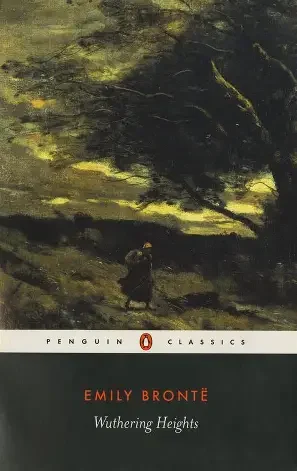
Wuthering Heights by Emily Brontë
Set against the wild and windswept Yorkshire moors, Wuthering Heights tells the haunting story of Heathcliff and Catherine Earnshaw and a love that becomes as destructive as it is passionate. Heathcliff arrives at the Earnshaw household as an orphan and forms an intense bond with Catherine, but differences in social class and Catherine's desire for a more secure life ultimately drive them apart. Catherine chooses to marry the wealthy and respectable Edgar Linton, leaving Heathcliff devastated and determined to seek revenge. When Heathcliff returns years later, he uses his newfound wealth and power to manipulate the lives of those who once hurt him. His bitterness reaches far beyond Catherine and affects an entire second generation of the Earnshaw and Linton families. Told through layers of narration and memories, the novel gradually reveals the complicated history behind the people and places at its center. Brontë blends romance, Gothic mystery, revenge, family conflict, and the supernatural into a story unlike almost anything else in Victorian literature. Ultimately, Wuthering Heights is not simply a love story—it is a powerful exploration of obsession, grief, revenge, and the ways unresolved pain can echo across generations. First published in 1847, the novel initially divided critics but has since become one of the most enduring classics of English literature.
Why I Recommend Wuthering Heights
I recommend Wuthering Heights because it is one of those classics that stays with you long after you turn the final page. Emily Brontë creates such a powerful atmosphere that the Yorkshire moors almost become a character themselves—wild, isolated, beautiful, and a little unsettling. What I find especially fascinating is that this is not a traditional love story; Heathcliff and Catherine's relationship is complicated, obsessive, and often deeply destructive. The characters are flawed, sometimes frustrating, and rarely easy to categorize, which makes them endlessly interesting to discuss. I also love the Gothic elements, the family secrets, the revenge, and the way the consequences of one generation's choices affect the next. Wuthering Heights can be a challenging read, but that complexity is part of what makes it such a rewarding classic to explore. If you enjoy dark romance, complicated characters, Gothic atmosphere, and stories that leave you thinking long after you've finished them, this is a classic worth experiencing.