
Romanticism
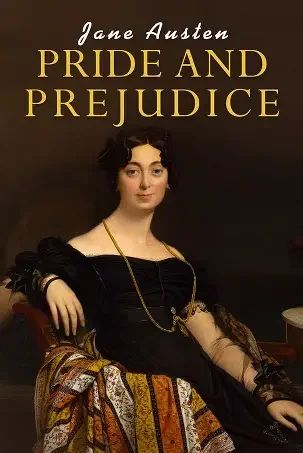
Pride and Prejudice by Jane Austen
Set in Regency-era England, Pride and Prejudice follows Elizabeth Bennet, an intelligent and spirited young woman navigating love, family, and the expectations placed upon women of her time. When the wealthy and charming Mr. Bingley arrives in the neighborhood, Elizabeth's older sister Jane quickly catches his attention, while his proud friend, Mr. Darcy, makes a decidedly less favorable first impression on Elizabeth. As Elizabeth and Darcy continue to encounter one another, their initial dislike slowly gives way to something far more complicated. Along the way, Elizabeth must navigate the schemes of the ridiculous Mr. Collins, the charming but deceptive Mr. Wickham, and the increasingly chaotic behavior of her younger sisters. Austen uses these relationships to explore how quickly we can form opinions about others—and how difficult it can be to admit when those opinions are wrong. Beneath its famous love story, the novel offers a sharp and often hilarious look at class, marriage, money, reputation, and the limited choices available to women. Ultimately, Elizabeth and Darcy must both confront their own pride and prejudice before they can truly understand one another. Published in 1813, the novel remains one of Austen's most enduring works and a beloved example of how romance, wit, and social commentary can work beautifully together.
Why I Recommend Pride and Prejudice
I recommend Pride and Prejudice because it is one of those rare classics that feels surprisingly alive, even more than two centuries after it was written. Jane Austen's writing is clever, witty, and wonderfully observant, and Elizabeth Bennet is the kind of character who is easy to admire—independent, intelligent, outspoken, and imperfect. I love that the novel is so much more than a love story; beneath the romance is a sharp examination of class, marriage, family expectations, reputation, and the assumptions we make about other people. Elizabeth and Darcy's relationship is especially satisfying because neither character simply gets everything right—they both have to look honestly at themselves and grow. And then there is Austen's humor, which makes the book feel remarkably modern in its observations about family and society. If you think classics are intimidating or difficult to connect with, Pride and Prejudice is a wonderful place to begin. It is romantic, funny, smart, and still has something to say about the way we judge—and sometimes misjudge—one another.