Randolph Caldecott: The Artist Who Changed the Way Children's Stories Are Told
1846–1886 | Illustrator, Artist, and Pioneer of the Modern Picture Book
Book Bizarre | Literary Awards | History & Origins
The Man Behind the Medal
Every year, one of the most prestigious awards in children's literature bears the name of Randolph Caldecott. The gold medal appears on the covers of extraordinary picture books, signaling excellence in illustration and visual storytelling.
Yet many readers who recognize the award know relatively little about the man who inspired it.
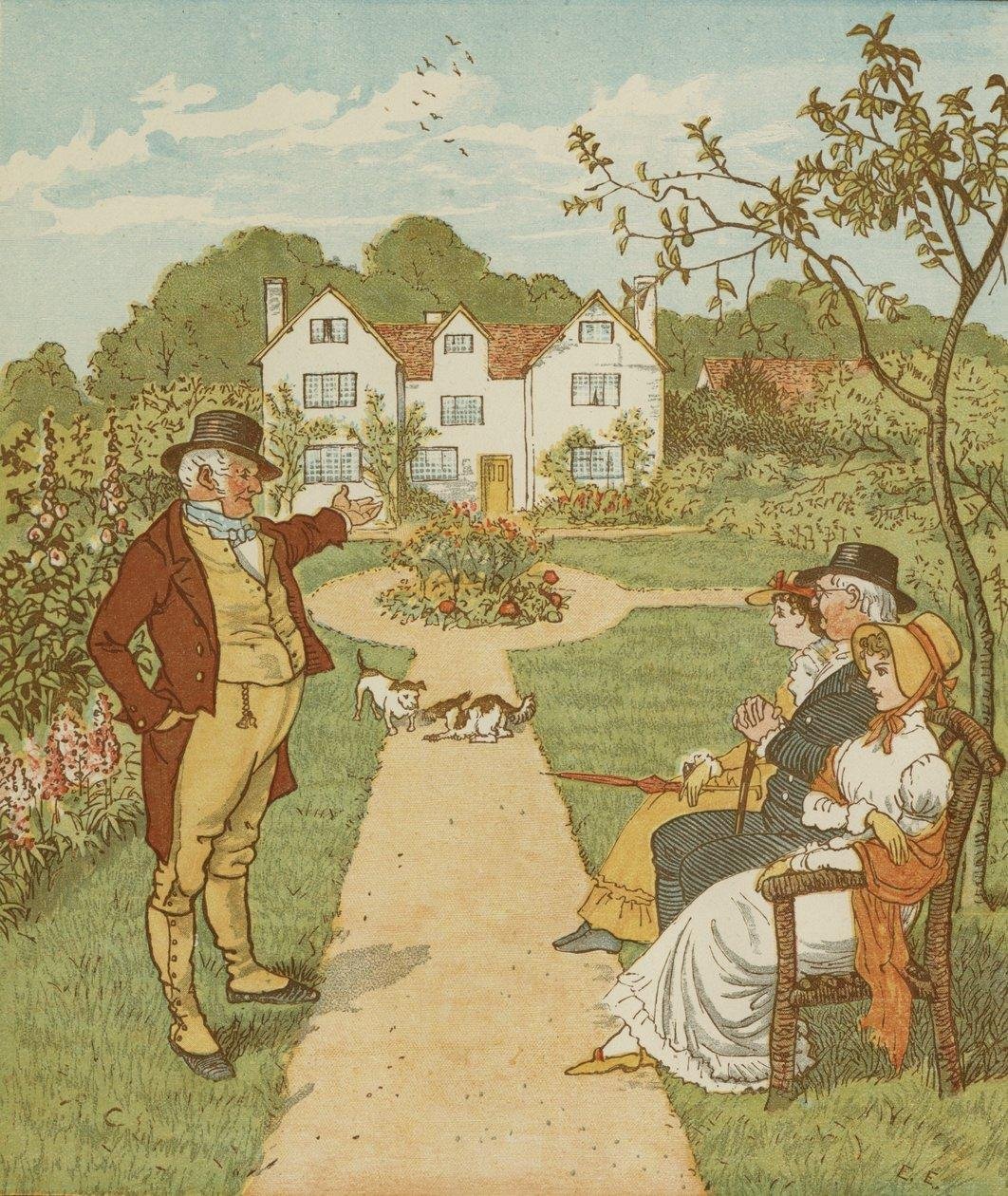
Randolph Caldecott was a nineteenth-century British artist whose illustrations helped transform children's books from collections of words accompanied by decorative pictures into stories in which images played an essential narrative role.
His artwork was lively, expressive, humorous, and filled with movement. Rather than simply illustrating what a story said, Caldecott discovered ways to make pictures communicate what words left unsaid.
Although his life was tragically short, his influence on children's literature would extend far beyond his own century.
A Childhood Filled with Drawing
Randolph Caldecott was born on March 22, 1846, in Chester, England, to John and Mary Dinah Caldecott.
His father was a businessman and accountant, and Randolph grew up in a large family in Victorian England.
From an early age, he demonstrated an extraordinary interest in drawing, particularly animals, people, and scenes from everyday life. He also enjoyed carving and modeling figures.
His artistic ability became evident during his school years, when he received recognition for his drawings.
But nineteenth-century England was not necessarily an encouraging environment for a young person hoping to pursue illustration as a profession. His family considered a career in business a more practical choice.
At fifteen, Caldecott left school and began working as a bank clerk.
For many aspiring artists, that might have marked the end of a creative ambition.
For Caldecott, it was only the beginning.
The Bank Clerk Who Never Stopped Drawing
In 1861, Caldecott began working at the Whitchurch and Ellesmere Bank in Shropshire.
Although banking provided a stable occupation, his imagination remained firmly connected to the world around him.
He spent his free time sketching animals, horses, rural landscapes, and the people he encountered during his travels through the countryside.
His interest in observation became an essential part of his artistic development. Rather than drawing stiff, idealized figures, Caldecott studied how animals moved, how people behaved, and how ordinary moments could reveal humor or personality.
That same year, he achieved an early milestone.
A drawing he made of a fire at the Queen's Railway Hotel in Chester appeared in The Illustrated London News.
He was only fifteen years old.
In 1867, Caldecott transferred to a banking position in Manchester, where he attended evening classes at the Manchester School of Art.
During these years, he continued submitting drawings to newspapers and magazines.
His growing success suggested that the artistic career he had imagined might actually be possible.
Leaving Security Behind to Pursue Art
By 1872, Caldecott had gained enough recognition through published illustrations to make a life-changing decision.
At twenty-six, he left banking and moved to London to become a professional artist.
It was a significant risk.
He was abandoning a stable profession for a career dependent on commissions, publishers, and public interest in his work.
But his decision soon began to pay off.
Caldecott contributed illustrations to publications including Punch, The Graphic, and London Society. His drawings frequently captured humorous incidents, fashionable society, rural life, and the behavior of people and animals.
He also illustrated travel books and literary works, including books by Washington Irving.
His artistic interests extended beyond illustration. He worked in watercolor, oil painting, and sculpture, and his artwork appeared in respected exhibitions.
Caldecott was becoming an established artist.
Yet the work for which he would be remembered most had not begun.
The Partnership That Changed Children's Books
In 1877, printer and engraver Edmund Evans approached Caldecott about illustrating children's books.
Evans was known for his expertise in color printing, an important development at a time when producing affordable illustrated books was technically demanding.
Their collaboration would become one of the most influential partnerships in the history of children's publishing.
In 1878, two illustrated books appeared:
The House That Jack Built
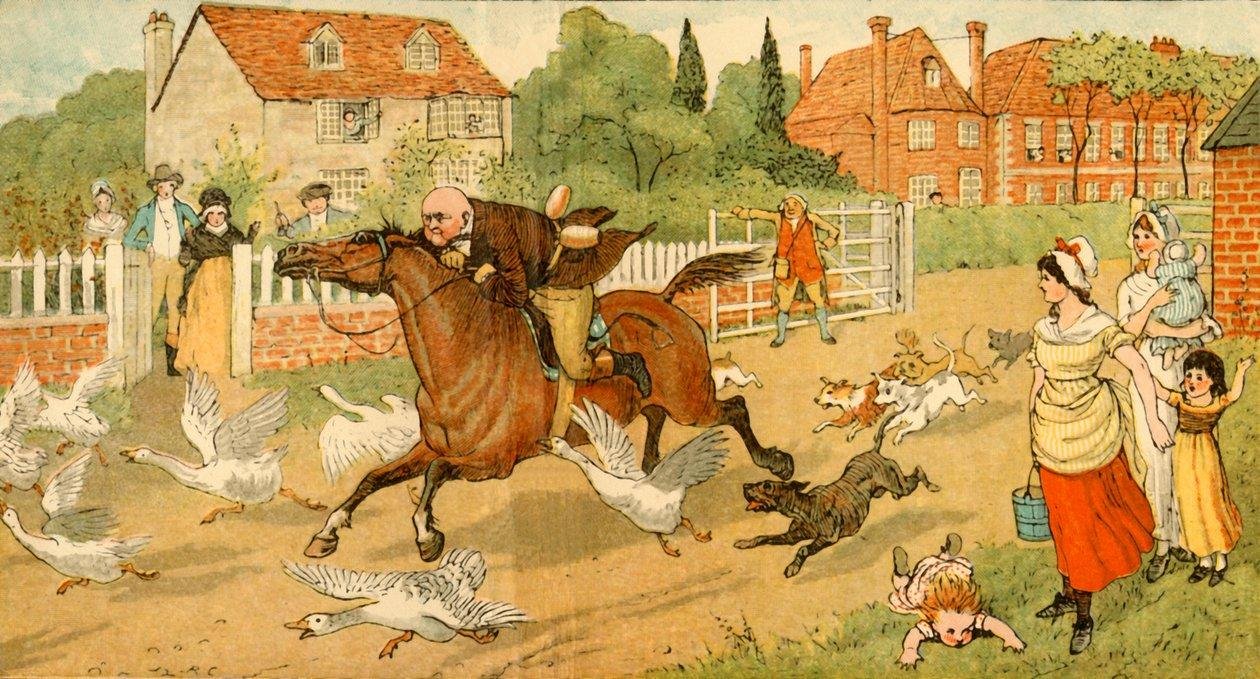
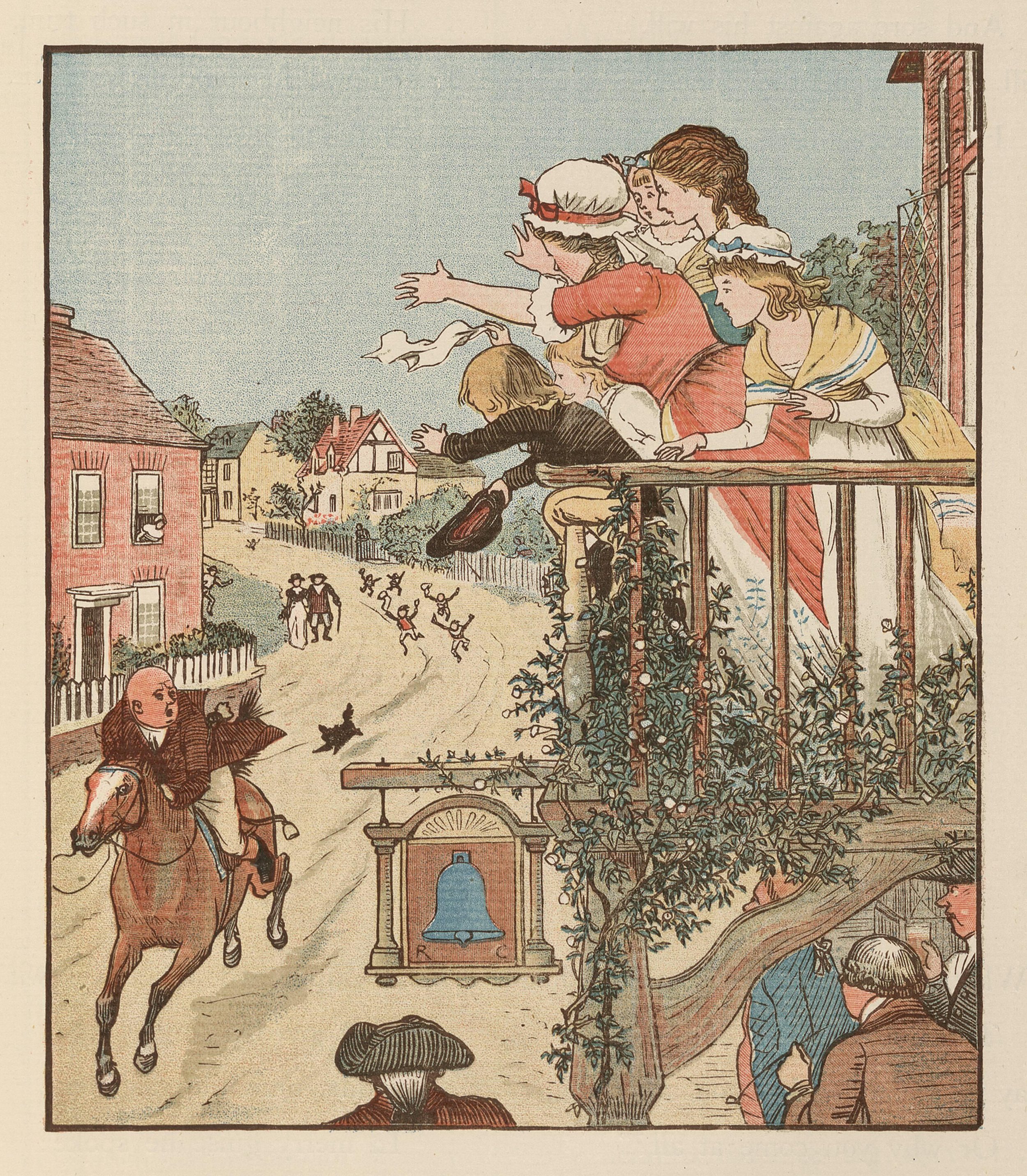
The Diverting History of John Gilpin
These books were immediately successful.
Caldecott's illustrations brought an extraordinary sense of energy and personality to familiar rhymes and stories.
His characters did not merely stand on the page. They ran, stumbled, laughed, reacted, and moved through scenes filled with visual humor.
The collaboration continued, with two new illustrated books appearing annually during the Christmas season.
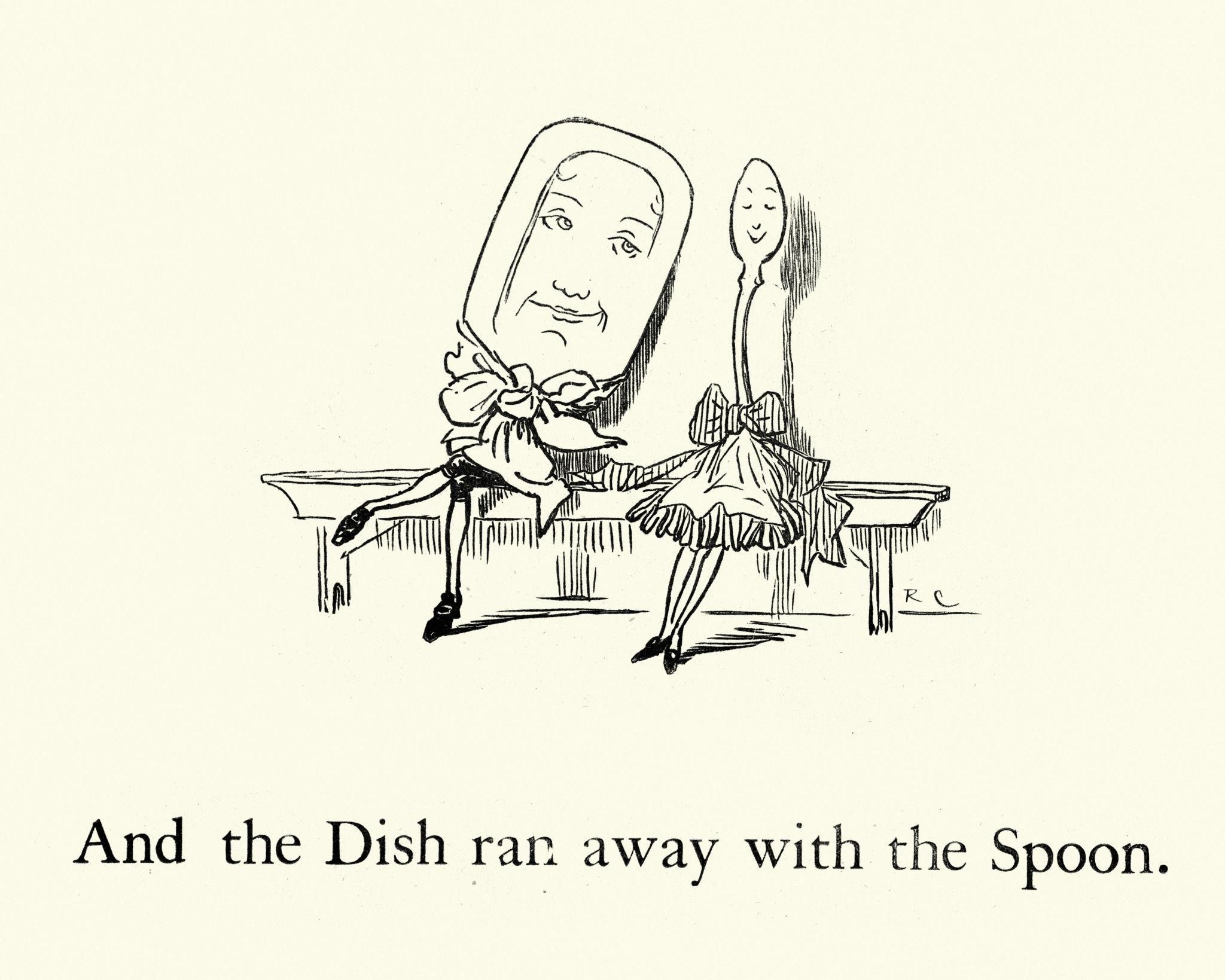
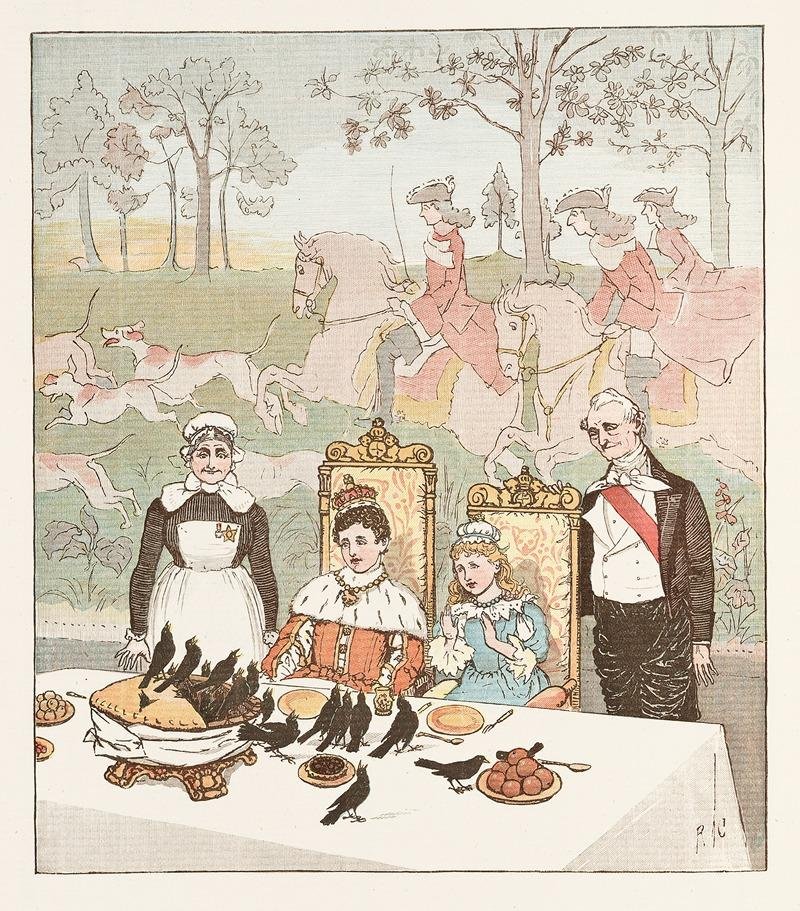
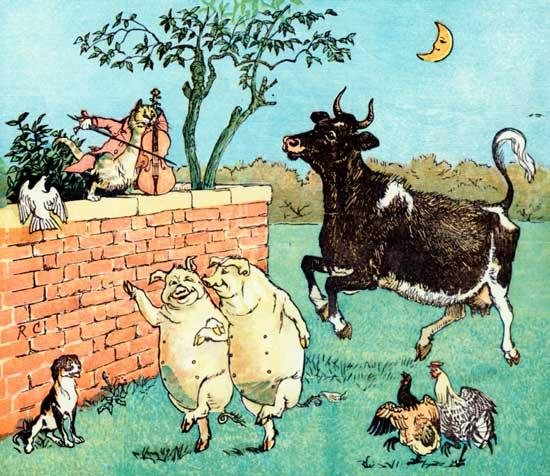
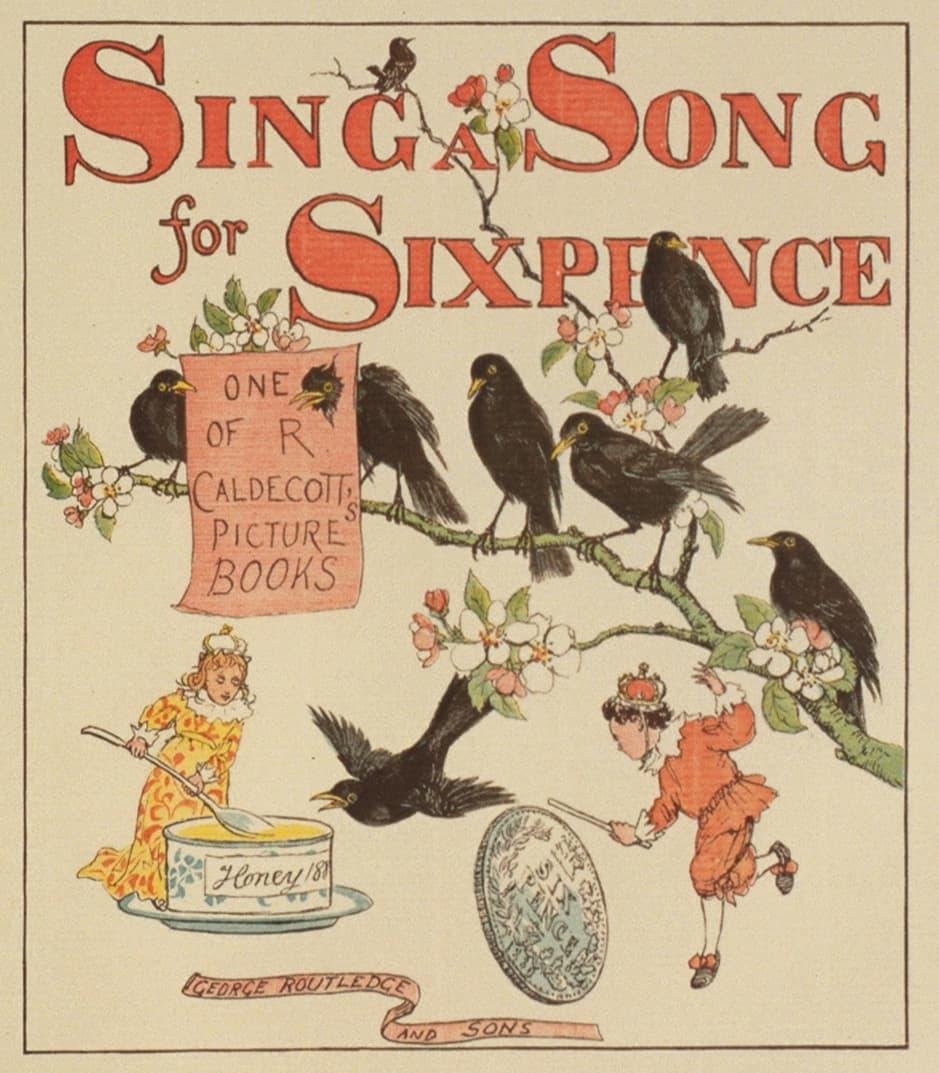
Over the following years, Caldecott illustrated sixteen celebrated picture books, including The Babes in the Wood, The Three Jovial Huntsmen, Sing a Song of Sixpence, and Hey Diddle Diddle.
These works became enormously popular with Victorian families.
By 1884, sales of his nursery books had reportedly reached approximately 867,000 copies.
But their importance extended far beyond commercial success.
Caldecott was changing what illustrations could accomplish.
Pictures That Told Their Own Stories
What made Randolph Caldecott's illustrations so different?
The answer lies in the relationship he created between words and images.
In many earlier illustrated books, pictures primarily represented events already described in the text.
Caldecott approached illustration differently.
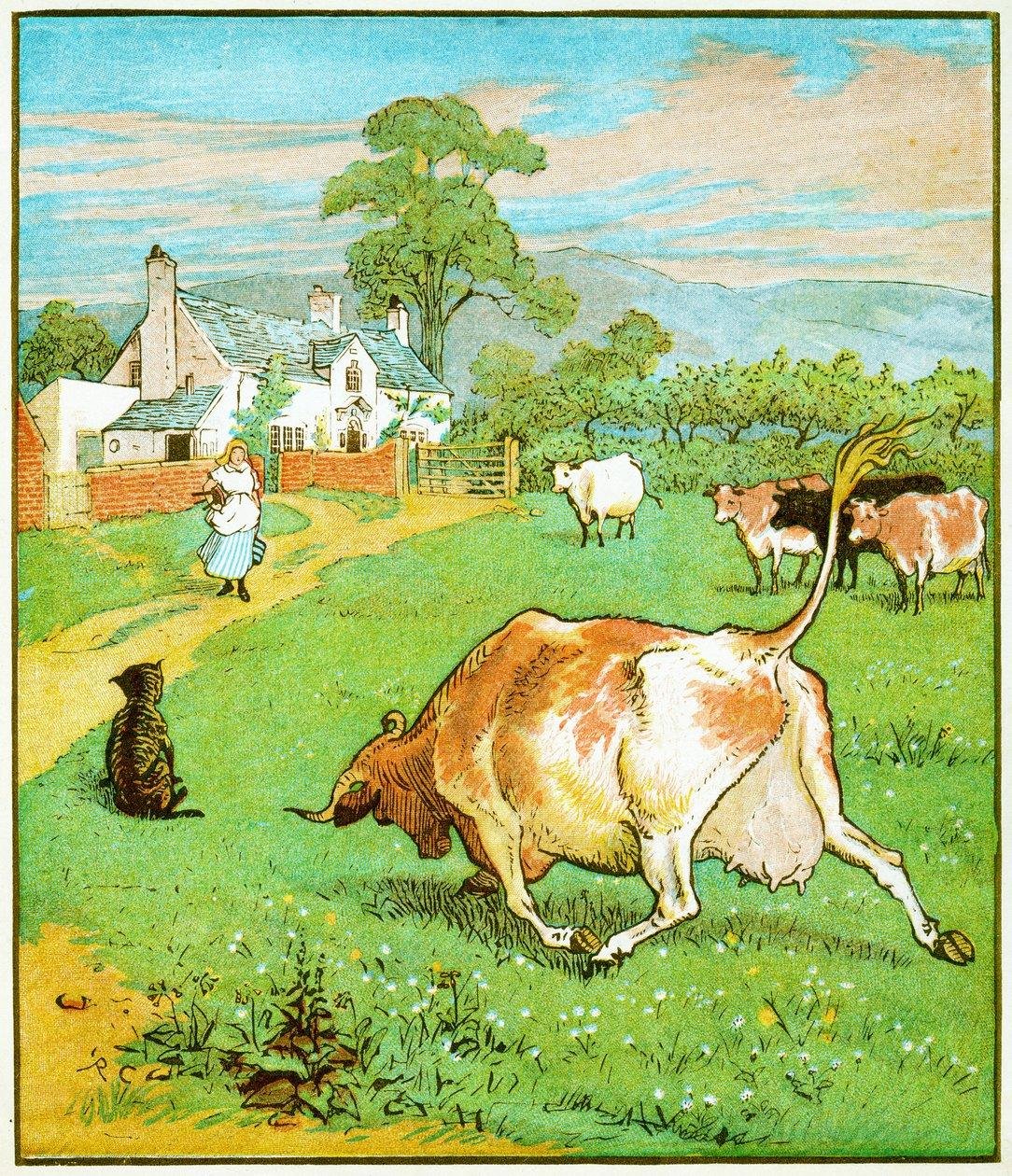
His pictures frequently added humor, movement, emotional expression, and narrative details that were not explicitly contained in the accompanying words.
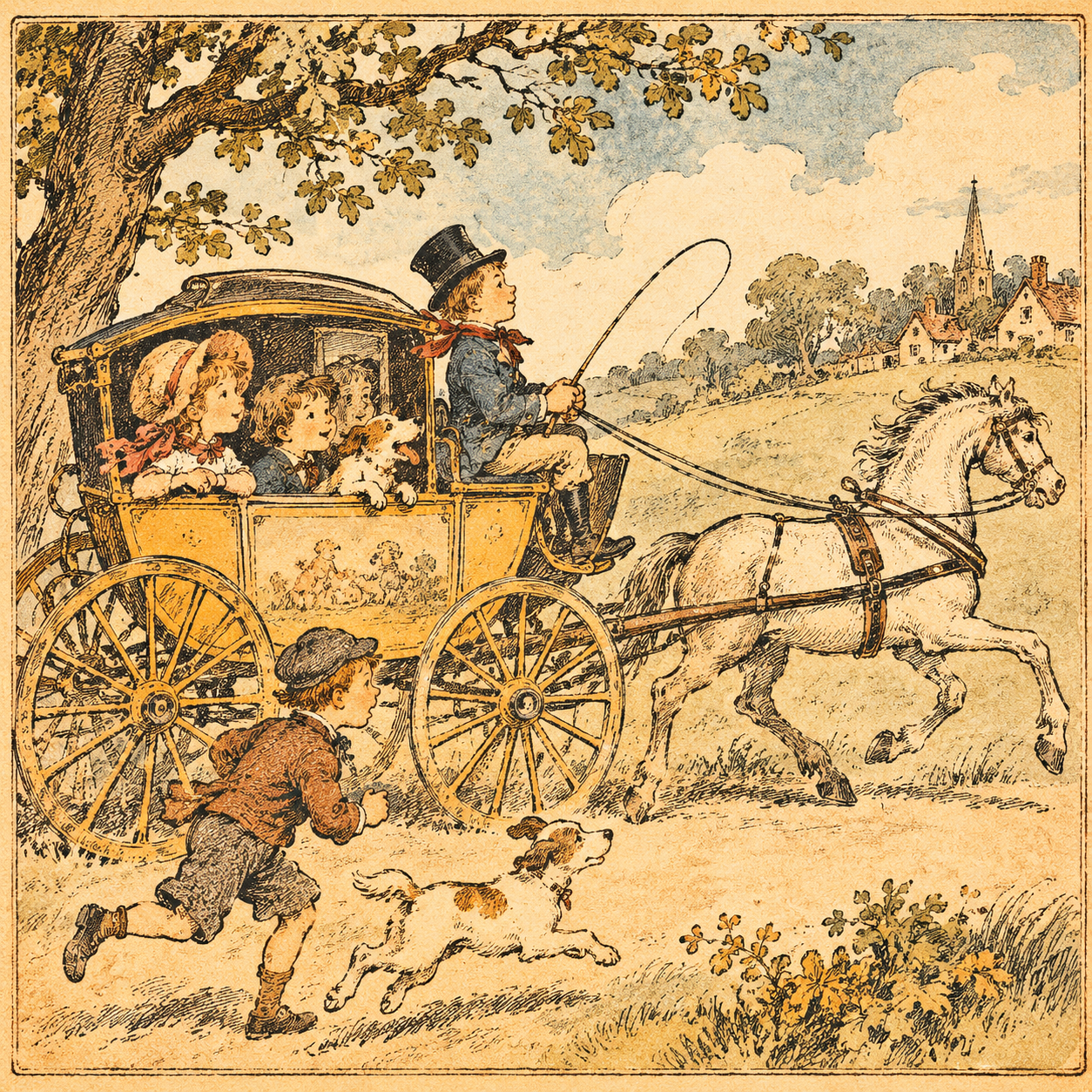
A character's posture might reveal surprise. A horse's exaggerated movement might communicate comedy. A sequence of images might show an event unfolding beyond what the text described.
Readers were encouraged to interpret both the written story and the visual story.
This approach was especially important for young children.
Even before children could independently read the printed words, they could follow actions, recognize emotions, anticipate events, and construct meaning through the illustrations.
Caldecott understood that pictures were not simply decorations.
They were part of the storytelling itself.
That principle remains central to the modern picture book.
An Artist Inspired by Everyday Life
Caldecott's artistic imagination was deeply connected to the world he observed.
The English countryside provided endless inspiration. Horses, dogs, farm animals, village streets, and ordinary people appeared repeatedly in his work.
He had a particular gift for portraying animals with both accuracy and personality.
His drawings often conveyed movement through economical lines and carefully observed gestures. A galloping horse, a startled dog, or a running child could appear remarkably alive.
Humor was another defining feature.
Caldecott frequently exaggerated expressions and actions just enough to make a scene entertaining without losing its connection to real life.
His illustrations combined artistic skill with an understanding of human behavior.
This ability to capture small, recognizable moments helped make his books accessible to children while remaining appealing to adults.
A Life Cut Tragically Short
Despite his professional success, Caldecott experienced recurring health problems throughout his adult life.
He suffered from a heart condition and other illnesses that often led him to seek warmer climates during the winter.
In 1880, he married Marian Brind, who accompanied him on his travels.
During the winter of 1885–1886, the couple traveled to the United States, eventually reaching Florida.
Caldecott became seriously ill and died in St. Augustine on February 12, 1886.
He was only thirty-nine years old.
He was buried in St. Augustine, where his grave remains a reminder of the British artist whose work would eventually become so important to American children's literature.
Although his career was relatively brief, he left behind a remarkable body of illustrations, paintings, sketches, and picture books.
His influence was only beginning.
How His Name Became an American Literary Honor
More than fifty years after Caldecott's death, American children's literature advocates recognized the need for an award devoted specifically to picture-book illustration.
The Newbery Medal, established in 1922, already honored distinguished contributions to children's literature.
But picture-book illustration deserved recognition in its own right.
In 1937, the American Library Association established a new medal named in honor of Randolph Caldecott.
The first Caldecott Medal was awarded in 1938 to Dorothy P. Lathrop for Animals of the Bible, A Picture Book.
The medal's design, created by sculptor René Paul Chambellan, incorporates imagery inspired by Caldecott's illustrations.
It was a fitting tribute.
The artist who had helped demonstrate that pictures could tell stories would become the namesake of an award recognizing exceptional visual storytelling.
A Legacy That Continues Today
Nearly a century and a half after Caldecott created his celebrated picture books, his influence remains visible throughout children's publishing.
Contemporary illustrators use an extraordinary range of artistic approaches, including watercolor, collage, printmaking, photography, digital illustration, and mixed media.
Yet the central question remains much the same:
How can pictures communicate meaning in ways that words alone cannot?
The finest picture books invite readers to look closely, interpret visual details, and discover relationships between images and text.
They encourage children to make inferences, understand emotions, recognize patterns, and construct meaning.
These are not merely artistic experiences. They are also important literacy experiences.
Caldecott's work helped establish the foundation for this understanding of visual storytelling.
His legacy reminds us that children's literature is not defined by the number of words on a page or the age of its intended audience.
A picture book can be a sophisticated work of art, capable of communicating ideas that resonate across generations.
Why Randolph Caldecott Still Matters
At Book Bizarre, we believe understanding the history of children's literature helps us appreciate the books we read today.
Randolph Caldecott's story is about more than a talented illustrator who became the namesake of an award.
It is also the story of an artist who pursued his creative ambitions despite beginning his working life in an entirely different profession.
It is the story of someone who observed ordinary life and discovered extraordinary possibilities within it.
And perhaps most importantly, it is the story of an illustrator who helped change how we understand the relationship between pictures and words.
Today, the Caldecott Medal celebrates artists who continue that tradition of innovation.
But the origins of the award lead us back to a young bank clerk who never stopped drawing.
Randolph Caldecott did not simply illustrate stories. He helped change the way stories could be told.
Sources & Further Reading
American Library Association — Caldecott Medal Committee Manual. Historical background on Randolph Caldecott, his career, and the award named in his honor.
Randolph Caldecott Society — Who Was Randolph Caldecott? Detailed biography covering his childhood, career, artistic achievements, marriage, and death.
Whitchurch Heritage Centre — Randolph Caldecott. Historical information about his banking career, early drawings, and connection to the English countryside.
Penguin Random House — Randolph Caldecott. Publishing biography highlighting his collaboration with Edmund Evans and his illustrated children's books.
Victoria and Albert Museum — Randolph Caldecott's Early Bank Sketches. Museum research exploring his early artistic development while working in banking.
Caldecott Festival — Life Story. Chronological overview of important events in the illustrator's life and career.
Join the Conversation
Randolph Caldecott helped establish the idea that illustrations could contribute meaning beyond the written text.
What do you think makes a picture-book illustration truly exceptional?
Can illustrations tell a story just as effectively as words?
And should picture books receive greater recognition as works of literature and art?
Share your thoughts with the Book Bizarre community as we explore the history, artistry, and lasting influence of children's literature.
What Did You Think?
What stood out to you about Randolph Caldecott's story?
Choose the reaction that best reflects your thoughts.

BOOK BIZARRE | HISTORY & ORIGINS
Historical Sources & Further Reading
Explore the historical records, museum research, and literary organizations that help preserve Randolph Caldecott's life, artistic achievements, and lasting influence on children's literature.
Randolph Caldecott Society Biography, historical background, and information about his artistic legacy. Whitchurch Heritage Centre His early career, local history, and connection to the English countryside. Victoria and Albert Museum Research into Caldecott's early drawings and artistic development while working in banking. American Library Association Official Caldecott Medal information, award history, criteria, and past recipients.Exploring the past helps us better understand the stories and illustrations we treasure today.
BOOK BIZARRE | CELEBRATING LITERARY HISTORY

A Picture Is Worth More Than a Thousand Words
Coming Soon to Book Bizarre
What made Randolph Caldecott's illustrations so revolutionary?
From galloping horses and playful animals to expressive characters and scenes filled with humor, Caldecott brought movement and personality to the pages of children's books.
In our upcoming feature, The Art of Randolph Caldecott, we'll take a closer look at eight examples of his illustrations, exploring how he used pictures to tell stories, convey emotion, and capture the imagination of young readers.
Coming Soon — Explore the artwork that helped shape the modern picture book.