The Story Behind the Story: Beloved
The name Toni Morrison is familiar to anyone who has a deep appreciation for literature. But falling in love with Beloved made me want to know more—not just about the story itself, but about the woman who created it and the history that lived beneath its pages.
Beloved is a haunting story of slavery’s enduring scars, where a mother and her family are forced to confront the devastating weight of memory, love, loss, and a past that refuses to stay buried. Morrison's writing is both beautiful and brutal—poetic enough to linger in your mind, yet powerful enough to make you confront the history, pain, love, and humanity at the heart of her work.
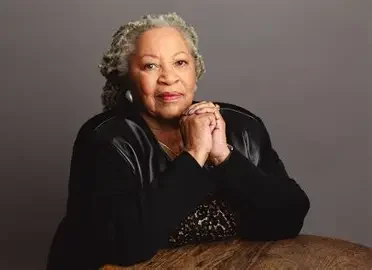
Toni Morrison, author of Beloved.
But the more I thought about Beloved, the more I wanted to understand the story behind the story. I began researching some of the historical details and discovered something that changed the way I understood the book. What Morrison created was not simply a work of fiction inspired by slavery; it was deeply rooted in the horrifying realities of enslaved people whose lives, families, and humanity were treated as property.
That discovery led me to an article from the National Endowment for the Arts in which Morrison discusses how Beloved came to be. What fascinated me most was learning that even Morrison did not begin the novel knowing exactly who Beloved would become.
She explained that she initially understood the haunting in the house as simply “poison or venom,” but as she wrote, a much larger question emerged: Who had the right to judge Sethe for what she had done?
Morrison eventually realized that the only person who could truly answer that question was the child who had died.
“I thought the only person who was legitimate, who could decide whether [the killing] was a good thing or not, was the dead girl.”
That realization led Morrison to create Beloved—not simply as a ghost, but as a voice for the child who had never been given the opportunity to speak.
And that stopped me.
Here was Toni Morrison, one of the most celebrated writers of our time, revealing that even she discovered the heart of her story as she wrote it. Beloved wasn’t simply a character Morrison planned and placed into the novel. She emerged from a question Morrison herself could not answer.
Who gets to decide what a mother should do when the world has denied her the right to be a mother in the first place?
That question gives Beloved another layer of power for me. Morrison wasn’t just telling us what happened. She was asking us to sit with something much harder: the impossible choices created by slavery and the devastating consequences that remain long after slavery itself has ended.
Learning how Morrison arrived at Beloved deepened my appreciation for her craft. It reminded me that great literature doesn’t always begin with answers. Sometimes, it begins with a question so difficult that the writer has no choice but to follow it wherever it leads.
And perhaps that is part of what makes Beloved so unforgettable. Morrison didn’t simply write about the past. She gave the past a voice—and then made us listen.
Source & Further Reading
Gross, Rebecca. “Toni Morrison, on How ‘Beloved’ Came to Be.” National Endowment for the Arts, 9 Feb. 2015.
