Teachers Professional Book Club
Teaching is a profession that asks us to be lifelong learners. The Teachers Professional Book Club is a space to explore books that challenge our thinking, expand our knowledge, and inspire us to grow as educators. From literacy and learning to special education, inclusion, classroom practice, leadership, and the ever-changing landscape of education, these books invite us to pause, reflect, question, and learn from the experiences and expertise of others. More than a collection of professional books, this is a place for ideas, conversation, reflection, and growth—because when teachers continue learning, our students benefit too.

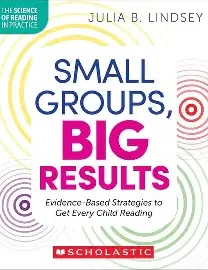
Small Groups, Big Results is exactly the kind of professional book that teachers can pick up and immediately see how it might change their classroom practice. Julia Lindsey takes a research-based approach to one of the most challenging parts of literacy instruction—making small groups purposeful, targeted, and responsive to what individual students actually need. Rather than grouping students simply by reading level, Lindsey encourages teachers to identify specific “sticking points” and use focused, evidence-based routines to address those needs. The result is a practical approach that connects the science of reading with what small-group instruction can realistically look like in a busy classroom.
What I particularly appreciate about this book is that it doesn't leave teachers with theory alone. Lindsey provides specific routines, assessment ideas, teacher prompts, and instructional moves that can be put into practice right away. The approach is also flexible enough to address readers across the developmental spectrum, from foundational skills such as decoding, segmenting, and blending to vocabulary and comprehension. The book's emphasis on using data to determine what students need next—and then providing short, purposeful instruction—is especially valuable for teachers working with diverse learners. Small Groups, Big Results is a practical, accessible, and highly relevant addition to a teacher's professional library, particularly for educators looking to make their literacy small groups more intentional and aligned with the science of reading.
Why I think it's worth reading:
This is not a book that asks teachers to completely reinvent their literacy block. Instead, it gives teachers a clearer purpose for the small-group time they already have. Lindsey's model emphasizes data, specific student needs, targeted instruction, and routines that can sometimes be delivered in just a few minutes.

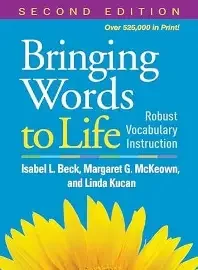
Bringing Words to Life challenges the traditional way vocabulary has often been taught in schools.
For many years, vocabulary instruction consisted of giving students a list of words, asking them to look up definitions, write sentences, memorize the meanings, and complete a test at the end of the week.
Beck, McKeown, and Kucan argue that this approach often produces superficial word knowledge rather than genuine understanding.
A student might remember that reluctant means unwilling, for example, but still struggle to recognize reluctance in a character's behavior, explain why someone is reluctant, or use the word naturally in conversation.
The authors believe vocabulary instruction needs to accomplish something much more substantial.
Students should understand words deeply enough to recognize them in different contexts, explain their meanings, connect them to other ideas, and use them independently in speaking, reading, and writing.
They call this approach robust vocabulary instruction.
The central message of the book is that vocabulary development should be intentional, interactive, meaningful, and continuous.
It is not enough for students simply to encounter unfamiliar words. Teachers must create opportunities for children to think about them, discuss them, experiment with them, and gradually incorporate them into their own language.
Why are Educators reading this book?
Educators are reading Bringing Words to Life: Robust Vocabulary Instruction because it addresses one of the most important challenges in literacy education: How do we help students develop a deeper understanding of language rather than simply memorize vocabulary words?
The book is particularly relevant as educators focus on the science of reading and recognize that accurate decoding does not automatically lead to strong reading comprehension.