Myths, Legends & Epics
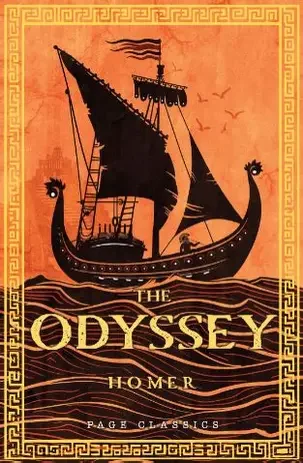
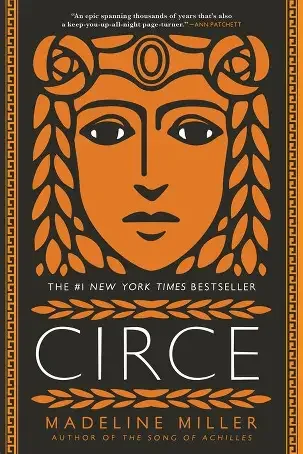
The Odyssey → Circe
Madeline Miller's Circe reimagines the world of Homer's The Odyssey by taking a character who appears only briefly in the original epic and placing her at the center of her own story. In The Odyssey, Circe is a powerful goddess and enchantress whom Odysseus encounters during his long journey home from the Trojan War. In Circe, Miller expands that encounter into a much larger story, exploring Circe's childhood, her relationships with the gods, her exile, and the experiences that shape her into the woman Odysseus eventually meets. The novel brings many familiar figures from Greek mythology—including Odysseus, Penelope, Telemachus, and Hermes—into a story told primarily from Circe's perspective. While The Odyssey is fundamentally Odysseus's epic journey, Circe asks what the story might look like from the perspective of a woman who was only a supporting figure in Homer's poem. Miller preserves elements of the ancient mythology while giving Circe greater agency, complexity, and a voice of her own.
It is less a retelling of The Odyssey itself than a reimagining of its mythology—taking a familiar character and asking what her story might have been when no one was listening.

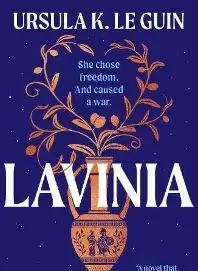
Lavinia by Ursula K. Le Guin (2008)
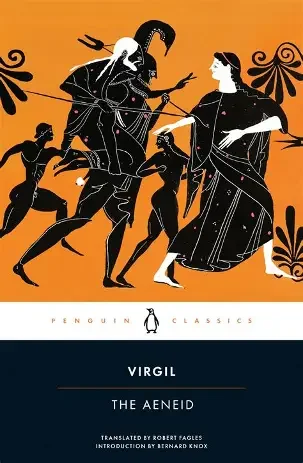
A Feminist Retelling of Virgil's The Aeneid
In Lavinia, acclaimed author Ursula K. Le Guin reimagines Virgil's ancient Roman epic, The Aeneid, by giving a voice to a woman who remains largely silent in the original work. In Virgil's poem, Lavinia is the daughter of King Latinus, destined to marry the Trojan hero Aeneas and become part of Rome's legendary founding story. Yet her own thoughts, desires, and experiences are left almost entirely unexplored.
Le Guin transforms this overlooked figure into the central character of a richly imagined novel set in ancient Italy. As political tensions rise and competing suitors threaten to plunge her homeland into war, Lavinia must navigate family expectations, prophecy, love, and the struggle to determine her own future. Through her perspective, readers experience the events surrounding Aeneas's arrival not simply as heroic conquest, but as deeply personal experiences shaped by duty, sacrifice, and the consequences of war.
Why This Retelling Matters: Lavinia challenges the traditionally male-centered perspective of classical epic literature by allowing a previously silenced woman to tell her own story. Le Guin explores questions of identity, agency, fate, and the ways history and literature preserve some voices while overlooking others. Her retelling demonstrates how revisiting a classic through a different perspective can reveal entirely new dimensions of a familiar story.