Race, Slavery & Civil Rights Books
These books explore the experiences of people who have faced racism, slavery, segregation, and the struggle for civil rights. Through both fiction and nonfiction, these stories help readers better understand the past, recognize its impact on the present, and hear the voices of those who lived through it. Books are organized by age level to help readers, families, and educators find an appropriate place to begin.
Elementary
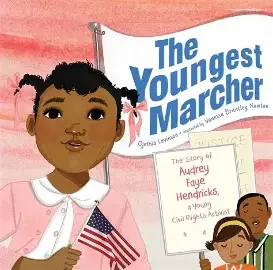
The Youngest Marcher
By Cynthia Levinson
The Youngest Marcher tells the true story of nine-year-old Audrey Faye Hendricks, the youngest known child arrested during the 1963 Birmingham Children’s March. Determined to stand against segregation and racial injustice, Audrey joins thousands of young people who peacefully protest unfair laws and are arrested for their actions. Despite the fear and harsh conditions she experiences in jail, Audrey remains courageous and becomes part of a movement that helped bring change to Birmingham. The book is an inspiring reminder that young people can speak up, stand against injustice, and make a difference.
Recommended for grades 2-4
Why It Bears Witness: It shows the injustice of racial segregation by telling the true story of a child who experienced discrimination and imprisonment while peacefully protesting for equality. It preserves Audrey Faye Hendricks’s story and shows how young people courageously stood up against an unjust system.
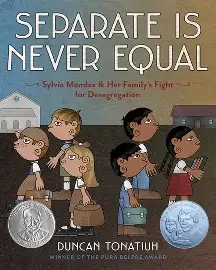
Separate is Never Equal
By Duncan Tonatiuh
Tells the true story of Sylvia Mendez and her family, who challenged segregation in California schools in the 1940s. When Sylvia and her brothers are denied enrollment in a nearby “White” school, their parents join other Mexican American families in fighting the unfair school system. Their lawsuit, Mendez v. Westminster, helped end school segregation in California and became an important step toward the broader fight for civil rights.
Recommended for grades 1-5
Why It Bears Witness: Separate Is Never Equal bears witness to the discrimination Mexican American children faced when schools were segregated by race and ethnicity. By telling Sylvia Mendez’s story, the book preserves an important part of the fight for educational equality and shows how one family’s courage helped create lasting change.

Middle School
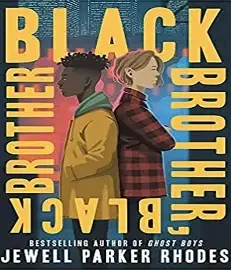
Black Brother, Black Brother
By Jewell Parker Rhodes | Middle Grade | Published 2020
Recommended Age: 10–14 (Grades 5–8)
Content Considerations: Racism, racial profiling, bullying, discrimination, and unfair treatment within the school disciplinary system. Some scenes may be emotionally upsetting.
Spoiler-Free Summary
Donte and Trey are brothers, but their experiences in the world are very different. Trey has lighter skin and is often treated with admiration, while Donte, who has darker skin, frequently faces suspicion, discrimination, and unfair punishment.
When Donte is unjustly accused of wrongdoing at his prestigious private school, he finds himself caught in a disciplinary system that seems determined to see him as a troublemaker. Frustrated by the injustice, Donte discovers fencing, a sport that offers him an opportunity to develop confidence, discipline, and a new sense of identity.
Through his journey, Donte learns to confront prejudice while discovering his own strength and self-worth.
Why This Book Bears Witness
Black Brother, Black Brother bears witness to the experiences of young Black boys who encounter racial bias in schools and everyday life.
Jewell Parker Rhodes explores colorism, racial profiling, unequal discipline, and the damaging consequences of judging children by their appearance rather than their actions.
By presenting these issues through the eyes of a middle school student, the novel makes systemic injustice accessible to younger readers without diminishing its seriousness.
The story also highlights the importance of family, mentorship, belonging, and perseverance.
Why We Recommend It: This novel encourages young readers to recognize unfair treatment, question stereotypes, and consider how racism can shape a child's educational and personal experiences. It offers an important starting point for conversations about fairness, identity, and the responsibility to challenge discrimination.
Middle School
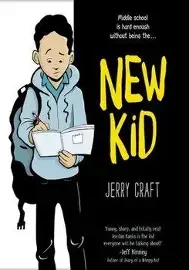
New Kids
By Jerry Craft
New Kid follows seventh-grader Jordan Banks, an aspiring artist who starts at a prestigious private school where he is one of the few Black students. As Jordan navigates a new school, unfamiliar classmates, friendships, and different expectations at home and school, he begins to recognize the ways race, class, and stereotypes affect how people treat one another. The graphic novel explores identity, belonging, friendship, and the everyday experiences of navigating a world where you don't always feel seen or understood.
Recommended for grades 5-7
Why It Bears Witness: New Kid bears witness to the everyday experiences of racism and stereotyping that can be difficult to recognize because they are often subtle rather than openly hostile. Jordan's story gives readers a personal perspective on identity, belonging, and what it feels like to navigate different expectations based on race and social class.

Young Adult
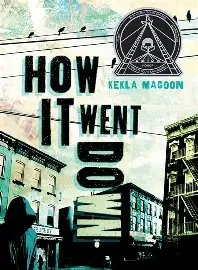
How It Went Down
By Kekla Magoon | Young Adult / Contemporary Realistic Fiction | Published 2014
Recommended Age: 14 and older (Grades 8–12). Best suited for mature middle school readers and high school students.
Content Considerations: Gun violence, the death of a teenager, racism, racial profiling, grief, gang involvement, and strong language. The novel explores emotionally difficult subjects that may be distressing for some readers.
Spoiler-Free Summary
When sixteen-year-old Tariq Johnson, a Black teenager, is shot and killed by a white man, his death sends shock waves through his community. But as witnesses, friends, family members, and strangers begin sharing their accounts of what happened, conflicting versions of the shooting emerge.
Was Tariq carrying a weapon? Was the shooter acting in self-defense? What really happened in the moments leading up to his death?
Told through multiple perspectives, How It Went Down reveals how personal experiences, assumptions, prejudice, and incomplete information can shape people's understanding of the same event.
As Tariq's family struggles with grief and the community searches for answers, readers are challenged to consider how difficult it can be to uncover the truth when everyone believes they know what happened.
Why This Book Bears Witness
How It Went Down bears witness to the devastating consequences of racial bias, gun violence, and the assumptions that can influence how society perceives Black teenagers.
Through its multiple narrators, Kekla Magoon demonstrates how race, personal experiences, community relationships, and media narratives can shape public understanding of a tragedy.
The novel also gives attention to those left behind—the family members, friends, and neighbors whose lives are permanently changed by violence.
Rather than offering a single, uncomplicated account, the story challenges readers to question how narratives are constructed, whose voices are believed, and how quickly assumptions can become accepted as facts.
Why We Recommend It: This powerful novel encourages readers to examine racial prejudice, media influence, and the importance of considering multiple perspectives before forming judgments. It provides an opportunity for meaningful conversations about justice, empathy, and the human consequences of violence.
Young Adult
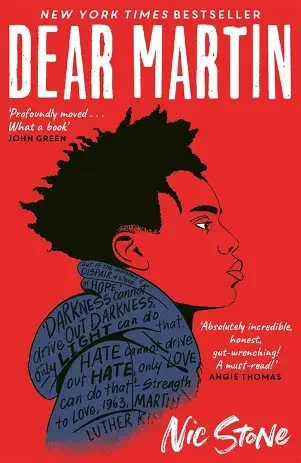
Dear Martin
By Nic Stone
Dear Martin follows Justyce McAllister, a Black high school student who struggles to understand the racism and injustice he encounters in his everyday life. Inspired by the teachings of Dr. Martin Luther King Jr., Justyce begins writing letters to him as a way to explore questions about race, identity, police violence, and what it means to fight for justice. As events around him become increasingly serious, Justyce is forced to confront the realities of racial prejudice and consider what kind of person he wants to become.
Recommended for grades 9-12
Why It Bears Witness: Dear Martin bears witness to the realities of racism and racial profiling through the experiences of a Black teenager navigating adolescence in a society shaped by racial inequality. It encourages readers to examine prejudice, privilege, justice, and the difficult question of how individuals can respond when they encounter injustice.

The Unboxing of a Black Girl
by Angela Shante
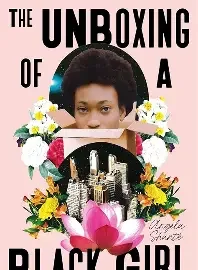
In The Unboxing of a Black Girl, Angela Shanté uses poetry and personal vignettes to explore growing up Black in New York City. Her reflections examine identity, belonging, and the expectations placed on Black girls while making space for joy, self-discovery, and finding one’s voice.
Through personal memories and poetry, Angela Shanté records how society’s expectations and stereotypes shape growing up, belonging, and finding a voice.
Her story makes those pressures personal and visible while also preserving joy, love, and self-discovery. By telling her own story on her own terms, she invites readers to recognize experiences that are too often overlooked or defined by others.
Why I Recommend It:
This book offers a powerful opportunity to see the world through someone else’s experiences—or feel recognized in your own. Its blend of poetry and storytelling invites meaningful conversations about stereotypes, individuality, and the freedom to define ourselves.
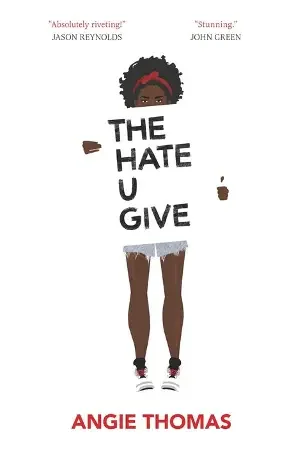
The Hate You Give
By Angie Thomas
The Hate U Give follows sixteen-year-old Starr Carter, who witnesses her childhood friend Khalil being fatally shot by a police officer during a traffic stop. Starr must navigate the trauma of what she has witnessed while facing pressure from her community, her school, the media, and the justice system. As she finds the courage to speak out, Starr becomes an important voice in the fight against racism, police brutality, and injustice.
Recommended for grades 9-12
Why It Bears Witness: The Hate U Give bears witness to racial injustice and police brutality through the perspective of a young Black woman who witnesses a devastating act of violence. Starr's story highlights the personal cost of racism while exploring the importance of finding one's voice, challenging injustice, and standing up for what is right.

Adult
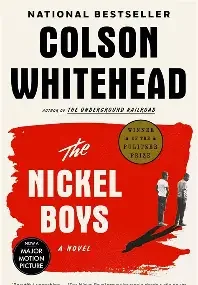
The Nickel Boys
By Colson Whitehead | Historical Fiction | Published 2019 | Pulitzer Prize Winner
Recommended Age: 16 and older (Grades 11–12 and adults). Best suited for mature high school readers rather than middle school students.
Content Considerations: Physical and psychological abuse of children, racism, racial violence, institutional cruelty, sexual abuse (referenced or implied), death, and traumatic experiences involving incarcerated youth.
Spoiler-Free Summary
Set in Florida during the 1960s, The Nickel Boys follows Elwood Curtis, an idealistic Black teenager who believes deeply in education, justice, and the teachings of Dr. Martin Luther King Jr.
Despite his determination to build a better future, an unfortunate encounter with the justice system sends Elwood to Nickel Academy, a reform school for boys. Behind the institution's respectable public image lies a world of violence, corruption, racial discrimination, and abuse.
At Nickel, Elwood befriends Turner, another student whose experiences have taught him to distrust authority and focus on survival. As the two boys navigate the institution's brutality, their contrasting beliefs about justice, hope, and resistance are tested.
Inspired by the history of a real Florida reform school, Colson Whitehead's novel examines the devastating consequences of institutional abuse and the courage required to maintain one's humanity in the face of injustice.
Why This Book Bears Witness
The Nickel Boys bears witness to the experiences of children who suffered abuse, neglect, and racial discrimination within institutions that were supposed to protect and rehabilitate them.
The novel draws inspiration from the Arthur G. Dozier School for Boys in Florida, where former students reported decades of physical and sexual abuse. Investigations uncovered evidence of institutional mistreatment and deaths, bringing long-overlooked experiences into public view.
Through Elwood and Turner's fictional experiences, Whitehead gives literary form to a history that remained hidden or ignored for generations.
The novel also examines how racism and unequal systems of justice placed Black children at particular risk, while challenging readers to consider what happens when institutions operate without meaningful accountability.
Why We Recommend It: The Nickel Boys is a powerful reminder that historical injustice is not limited to distant events or well-known tragedies. Some of the most disturbing chapters of American history occurred within institutions entrusted with children's care. Whitehead's novel encourages readers to confront these histories, recognize the importance of survivors' testimony, and question the systems that allowed such abuses to continue.
This book bears witness not only to the suffering of children whose voices were silenced, but also to the importance of remembering histories that society might prefer to forget.
Adult
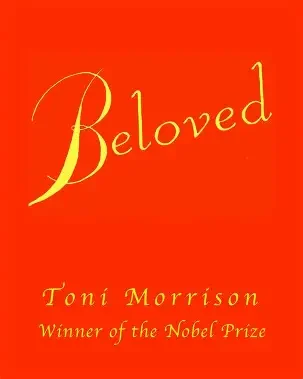
Beloved
By Toni Morrison
A formerly enslaved woman living in Cincinnati after the Civil War, is haunted by the trauma and memories of her life in slavery. When a mysterious young woman named Beloved appears, Sethe’s painful past begins to resurface, forcing her and those around her to confront the lasting effects of slavery. The novel explores memory, motherhood, identity, trauma, and the struggle to heal from an inhuman past.
Recommended for Adults
Why It Bears Witness: It shows the brutal realities of slavery, including the loss of freedom, family, identity, and bodily autonomy. Through Sethe’s story, the novel shows how the trauma of slavery continues long after emancipation and demands that those experiences be remembered.
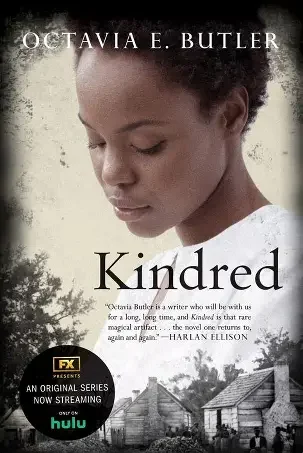
Kindred
By Octavia Butler
Kindred follows Dana, a young Black woman living in 1970s California who is mysteriously transported back in time to a Maryland plantation before the Civil War. There, she encounters her ancestors and is forced to confront the brutal realities of slavery, including violence, racism, and the denial of basic human rights. Each journey into the past brings Dana closer to understanding her family's history while forcing her to make impossible choices to survive.
Recommended for Adults
Why It Bears Witness: Kindred bears witness to the brutality and dehumanization of slavery by placing a modern Black woman directly inside the system that shaped her family's history. By connecting the past to the present, the novel shows how the legacy of slavery can continue to influence identity, relationships, and the understanding of racial injustice.