Historical Fiction - The Contenders
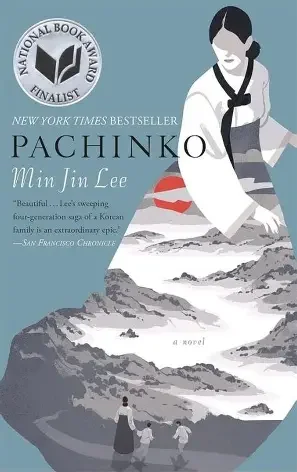
Pachinko
Author: Min Jin Lee
Genre: Historical Fiction / Literary Fiction
Why We Believe It Could Become a Future Classic
Min Jin Lee's Pachinko possesses many of the qualities that define enduring literature: sweeping historical significance, unforgettable characters, emotional depth, and an exploration of identity, family, sacrifice, and belonging that transcends generations and cultural boundaries.
Spanning much of the twentieth century, Pachinko follows four generations of a Korean family whose lives are profoundly shaped by Japanese colonial rule, immigration, discrimination, and the struggle to build a better future. Beginning with Sunja, a young Korean woman whose decisions alter the course of her family's history, the novel traces the experiences of people navigating a society that often views them as outsiders. Through their triumphs, hardships, and difficult choices, Lee creates an intimate portrait of a family struggling to preserve its identity and dignity across generations.
What makes Pachinko particularly remarkable is its ability to illuminate a history that has often received limited attention in Western literature. By exploring the experiences of Koreans living in Japan, Lee brings attention to the lasting consequences of colonialism, cultural displacement, and systemic discrimination. Yet the novel never allows its historical significance to overshadow the humanity of its characters. Their relationships, ambitions, disappointments, and sacrifices remain at the heart of the story.
Like many enduring works of historical fiction, Pachinko demonstrates how large historical events shape the lives of ordinary people. Its themes of immigration, identity, generational trauma, economic inequality, and the meaning of home remain deeply relevant in today's world. The novel also raises timeless questions about how much control individuals have over their destinies and what families are willing to sacrifice to give future generations greater opportunities.
Published in 2017, Pachinko was named a National Book Award finalist and received widespread critical recognition. However, its potential to become a classic rests on more than its literary accolades. Lee has created a multigenerational narrative that preserves an important historical experience while exploring universal questions about resilience, identity, and the human desire to belong.
The Case for Classic Status
If great literature allows readers to understand unfamiliar histories while recognizing the shared human experiences that connect us, Pachinko makes an exceptionally strong case for becoming a future classic.
Its memorable characters, historical richness, and exploration of cultural identity place it within the tradition of great family sagas that illuminate the relationship between individual lives and larger historical forces.
Perhaps most importantly, Pachinko offers future generations a deeply human perspective on displacement, prejudice, perseverance, and the complicated meaning of home.
Will Pachinko eventually stand alongside the great multigenerational novels of world literature? Its emotional power, cultural significance, and enduring themes make it a compelling contender for classic status.

The Nickel Boys
Author: Colson Whitehead
Genre: Historical Fiction / Literary Fiction
Why We Believe It Could Become a Future Classic
Colson Whitehead's The Nickel Boys possesses many of the qualities that define enduring literature: powerful social commentary, unforgettable characters, historical significance, and an unflinching examination of injustice, morality, and the lasting consequences of institutional cruelty.
Set in 1960s Florida during the Civil Rights Movement, the novel follows Elwood Curtis, an idealistic Black teenager who believes deeply in the teachings of Dr. Martin Luther King Jr. After an unfortunate encounter with the justice system, Elwood is sent to the Nickel Academy, a reform school where abuse, racism, and corruption are concealed behind the institution's promise of rehabilitation. There, he befriends Turner, a more skeptical young man whose understanding of survival challenges Elwood's faith in justice and human goodness.
Inspired by the real-life abuses at Florida's Dozier School for Boys, The Nickel Boys confronts a disturbing chapter of American history. Whitehead's restrained yet devastating storytelling exposes how institutions entrusted with protecting vulnerable children can instead become instruments of violence and oppression. The novel challenges readers to consider not only the individuals responsible for injustice but also the larger systems that allow such cruelty to continue.
What makes The Nickel Boys particularly remarkable is its exploration of two contrasting responses to injustice. Through Elwood and Turner, Whitehead examines the tension between idealism and survival, hope and disillusionment, and the difficult choices individuals face when confronted with systemic oppression. Their experiences raise questions about morality, resistance, and the personal cost of holding on to one's beliefs in an unjust world.
Like many works that achieve classic status, The Nickel Boys reaches beyond its historical setting. Its themes of racial inequality, institutional accountability, childhood vulnerability, and the struggle for justice remain relevant to contemporary society. The novel also demonstrates literature's ability to preserve painful histories and give voice to those whose suffering might otherwise be forgotten.
Published in 2019, The Nickel Boys received the 2020 Pulitzer Prize for Fiction, marking Whitehead's second Pulitzer win. Yet its potential to become a classic rest on more than literary recognition. Its emotional power, moral complexity, and connection to historical truth make it a work that may continue to challenge readers for generations.
The Case for Classic Status
If enduring literature forces us to confront uncomfortable historical truths while asking timeless questions about justice, humanity, and moral responsibility, The Nickel Boys makes an exceptionally compelling case for becoming a future classic.
Its concise but powerful narrative, unforgettable characters, and examination of institutional injustice place it within the tradition of American literature that challenges society to acknowledge its failures and consider its responsibilities.
Perhaps most importantly, The Nickel Boys reminds us that literature can serve as both storytelling and historical witness, preserving the experiences of those whose voices were too often silenced.
Will The Nickel Boys become essential reading for future generations seeking to understand America's history of racial injustice and the enduring struggle for human dignity? Its literary excellence, historical significance, and moral urgency make it a particularly strong contender for classic status.

James
Author: Percival Everett
Genre: Literary Fiction / Historical Fiction / Literary Reimagining
Why We Believe It Could Become a Future Classic
Percival Everett's James possesses many of the qualities that distinguish enduring literature: remarkable originality, powerful social commentary, literary sophistication, and an examination of race, identity, freedom, and the importance of whose stories are told.
A bold reimagining of Mark Twain's Adventures of Huckleberry Finn, James retells the familiar story from the perspective of Jim, the enslaved man who accompanies Huck on his journey along the Mississippi River. In Everett's telling, Jim—who claims the name James—emerges as an intelligent, complex, and deeply perceptive individual whose experiences expose the contradictions and cruelties of nineteenth-century American society.
What makes James particularly remarkable is Everett's decision to challenge one of the most influential works in American literature by shifting the narrative voice to a character whose humanity and intellectual depth were constrained by the original story's perspective. Through his use of language, satire, and carefully constructed narrative, Everett explores the ways enslaved people were forced to navigate a society that denied their intelligence, individuality, and freedom.
The novel raises profound questions about storytelling itself. Who has the authority to tell a story? Whose experiences become part of the literary canon? And how might our understanding of a familiar classic change when we hear it through the voice of someone previously pushed to the margins?
Like many works that eventually achieve classic status, James engages directly with an earlier literary tradition while offering something unmistakably new. Its exploration of racial injustice, power, language, and identity reaches far beyond its historical setting. At the same time, its relationship with Adventures of Huckleberry Finn creates an extraordinary opportunity for readers to reconsider an established American classic through a contemporary lens.
Published in 2024, James received extraordinary literary recognition, including the 2025 Pulitzer Prize for Fiction, the 2024 National Book Award for Fiction, and the 2024 Kirkus Prize for Fiction. Yet its potential to become a classic rests on more than these achievements. Everett has created a novel that not only stands on its own literary merits but also challenges the way future generations may read and interpret the American literary canon.
The Case for Classic Status
If great literature does more than tell a compelling story—if it challenges established narratives, expands our understanding of history, and changes how we interpret earlier works—then James makes an exceptionally strong case for becoming a future classic.
Its inventive storytelling, unforgettable narrative voice, and profound examination of race and identity position it as a novel that may become essential reading in discussions of American literature, historical memory, and the power of perspective.
Perhaps most significantly, James demonstrates that even the most established literary classics are not beyond reinterpretation. New voices and perspectives can transform familiar stories, revealing truths that earlier generations may have overlooked.
Will James eventually be studied alongside Adventures of Huckleberry Finn as an essential companion to one of America's most influential novels? Its literary ambition, cultural significance, and ability to reshape conversations about the classics make it an especially compelling contender.