Middle School Graphic Novels

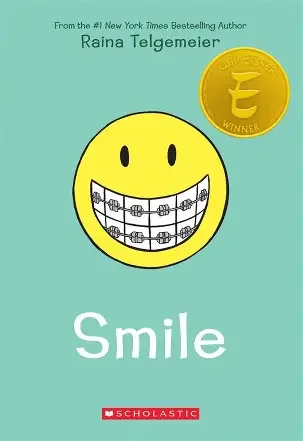
Smile tells the true story of Raina Telgemeier as a sixth grader who trips and severely injures her two front teeth. What follows is a long and sometimes embarrassing journey involving braces, surgery, headgear, dental procedures, and a retainer with fake teeth. But the story isn't really just about dentistry. While dealing with her changing appearance, Raina is also navigating friendship problems, boys, school, family, and the awkward transition from childhood toward adolescence. A major earthquake in San Francisco adds another unexpected challenge.
👧 Why middle schoolers connect with it
This is where Smile really shines. Telgemeier takes experiences that might seem ordinary—friendship drama, embarrassment, crushes, changing relationships, feeling self-conscious—and treats them as genuinely important.
For a middle school reader, Raina's experience can feel very recognizable:
“Everyone else seems to know how to fit in. Why don't I?”

American Born Chinese by Gene Luen Yang
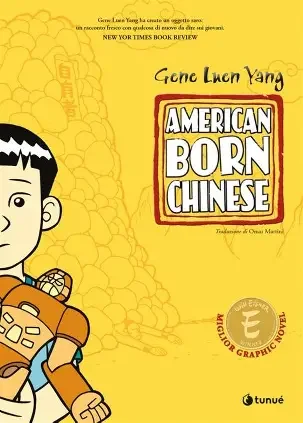
American Born Chinese follows three seemingly separate stories that gradually come together: Jin Wang, a Chinese American teenager struggling to fit in at his predominantly white school; Danny, a popular student whose life is disrupted by his embarrassing Chinese cousin, Chin-Kee; and the legendary Monkey King, who desperately wants to become something more than what others believe he can be. As the stories unfold, each character struggles in some way with identity, belonging, stereotypes, and the pressure to change who you are. Jin wants to fit in with his classmates and wrestles with what it means to be Chinese American. The Monkey King tries to escape the limitations placed upon him, while Danny is forced to confront uncomfortable truths about himself. Eventually, the three seemingly unrelated stories connect in a surprising way, revealing the deeper meaning behind their struggles. Funny, thoughtful, and at times uncomfortable, American Born Chinese explores what happens when we allow other people's expectations to shape how we see ourselves. At its heart, the novel is about accepting who you are rather than trying to become someone you think the world will find easier to accept.
Why I recommend it.
I recommend American Born Chinese because it is a smart, engaging graphic novel that manages to tackle some very complicated ideas while remaining accessible and surprisingly funny. Gene Luen Yang explores identity, belonging, cultural expectations, stereotypes, and the desire to fit in through three very different stories that ultimately come together in a powerful way. I especially appreciate how the graphic-novel format allows Yang to communicate ideas visually, making the characters' experiences and emotions especially memorable. The story also gives readers plenty to think about—particularly the ways we sometimes hide or reject parts of ourselves because we are worried about how others will see us.
It is entertaining, thought-provoking, and an excellent example of how graphic novels can tell sophisticated stories about identity and the human experience.