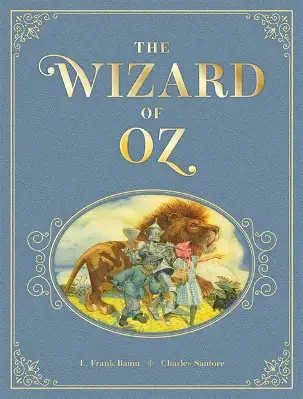
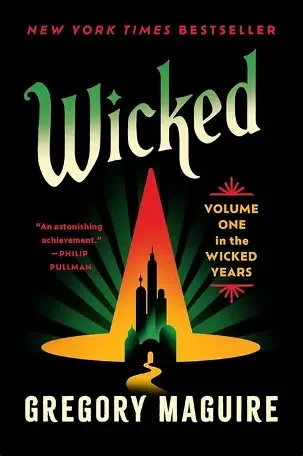
Wicked by Gregory Maguire (1995)
A Dark, Revisionist Retelling of L. Frank Baum's The Wonderful Wizard of Oz
In Wicked: The Life and Times of the Wicked Witch of the West, Gregory Maguire transforms L. Frank Baum's beloved 1900 children's cl### Wicked by Gregory Maguire (1995)
A Dark, Revisionist Retelling of L. Frank Baum's The Wonderful Wizard of Oz
In Wicked: The Life and Times of the Wicked Witch of the West, Gregory Maguire transforms L. Frank Baum's beloved 1900 children's classic, The Wonderful Wizard of Oz, into a dark, politically charged fantasy that tells the familiar story from an entirely different perspective.
Rather than following Dorothy along the Yellow Brick Road, Wicked explores the life of Elphaba, the misunderstood, green-skinned young woman who will eventually become known as the Wicked Witch of the West. Born into a world that judges her for being different, Elphaba grows into an intelligent, passionate, and fiercely independent woman who struggles against prejudice, political corruption, and the increasingly authoritarian rule of the Wizard of Oz.
As Elphaba navigates complicated friendships, love, betrayal, and the struggle for justice, readers begin to question the familiar division between good and evil. Is Elphaba truly wicked, or has she been labeled a villain because she challenges those in power?
Why This Retelling Matters: Maguire challenges the traditional fairy-tale assumption that heroes are inherently good and villains are inherently evil. By giving the Wicked Witch her own history, motivations, and voice, Wicked explores prejudice, political oppression, moral ambiguity, and the power of public perception. The novel encourages readers to reconsider familiar characters and question how society determines who deserves to be called a hero—or a villain.
Through this darker, more complex interpretation of Oz, Maguire demonstrates how a beloved children's classic can become a sophisticated examination of human nature, identity, and injustice.assic, The Wonderful Wizard of Oz, into a dark, politically charged fantasy that tells the familiar story from an entirely different perspective.
Rather than following Dorothy along the Yellow Brick Road, Wicked explores the life of Elphaba, the misunderstood, green-skinned young woman who will eventually become known as the Wicked Witch of the West. Born into a world that judges her for being different, Elphaba grows into an intelligent, passionate, and fiercely independent woman who struggles against prejudice, political corruption, and the increasingly authoritarian rule of the Wizard of Oz.
As Elphaba navigates complicated friendships, love, betrayal, and the struggle for justice, readers begin to question the familiar division between good and evil. Is Elphaba truly wicked, or has she been labeled a villain because she challenges those in power?
Why This Retelling Matters: Maguire challenges the traditional fairy-tale assumption that heroes are inherently good and villains are inherently evil. By giving the Wicked Witch her own history, motivations, and voice, Wicked explores prejudice, political oppression, moral ambiguity, and the power of public perception. The novel encourages readers to reconsider familiar characters and question how society determines who deserves to be called a hero—or a villain.
Through this darker, more complex interpretation of Oz, Maguire demonstrates how a beloved children's classic can become a sophisticated examination of human nature, identity, and injustice.